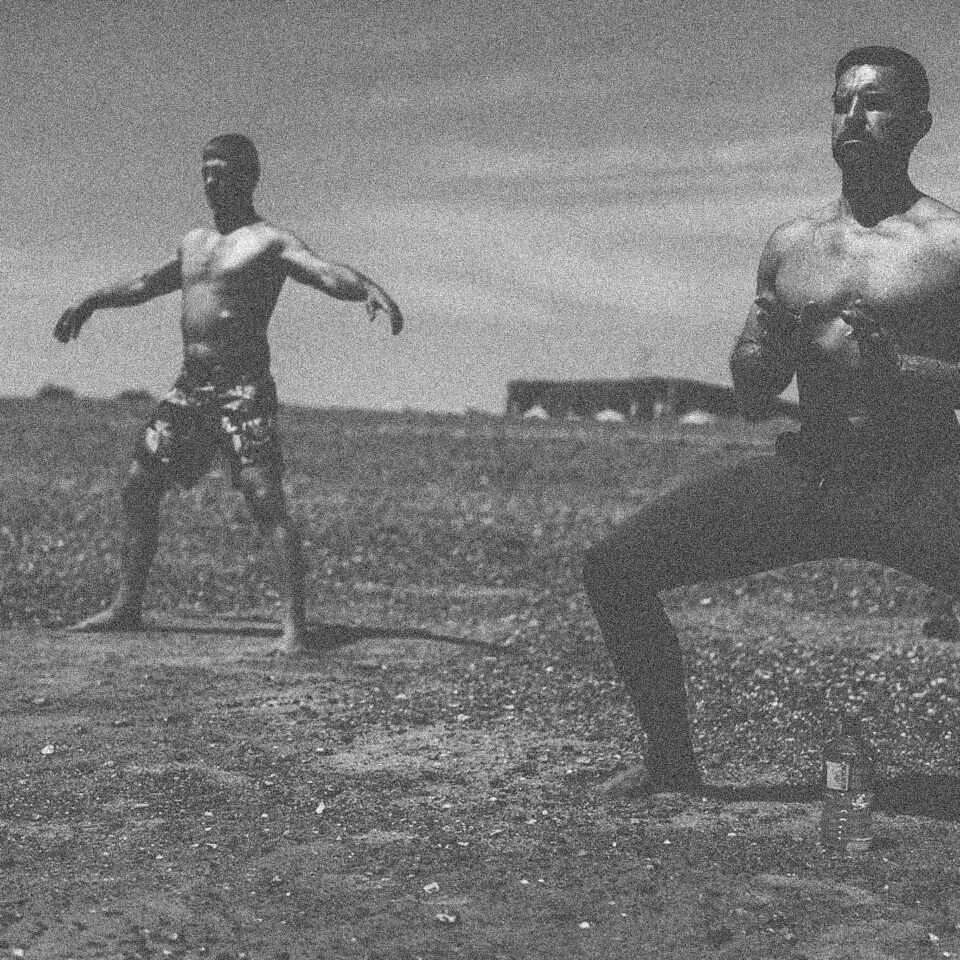



Tai Chi stances condition the nervous system through a combination of profound physical relaxation, sustained isometric resistance, and intense mental focus. This training method triggers significant adaptations in both the brain and the peripheral nervous system.
Here is how Tai Chi stances specifically condition the nervous system:
- Activating the Parasympathetic Nervous System: The deep, diaphragmatic breathing and calm mental state required during stance training actively stimulate the parasympathetic nervous system. This directly counteracts the “fight or flight” stress response driven by the sympathetic nervous system, naturally lowering blood pressure, reducing heart rate, and decreasing the release of stress hormones like cortisol.
- Enhancing Muscle Spindle Sensitivity: A key requirement of Tai Chi stances is maintaining physical structure with minimal muscular tension. Scientific studies show that focusing attention on the body while remaining completely relaxed allows the central nervous system to selectively increase the sensitivity of muscle spindles via fusimotor neurons. This heightens your kinesthetic awareness, making your nervous system incredibly fast and accurate at perceiving physical space, balance, and movement.
- Rewiring Habitual Motor Programs: The slow, deliberate nature of transitioning between stances induces neuroplastic changes in the brain. Moving slowly with reduced effort decreases the activation strength of your existing, hardwired motor programs. This essentially gives your nervous system a “blank slate,” enhancing its ability to learn new, highly efficient movement skills and inhibit clunky, habitual patterns.
- Preventing “Sensorial Dampening”: Seeking to perform varied, complex movements smoothly and quietly prevents the brain’s reticular formation and cerebellum from anticipating the movement and “tuning out”. This continuous, exploratory mental engagement keeps the nervous system from dampening its sensory input, keeping it highly alert.
- Developing Unified Muscular Sequencing: While bodybuilding isolates single muscles (which can detrain the nervous system and make movements disjointed), holding demanding Tai Chi stances applies prolonged, moderate resistance to the entire body. This forces the nervous system to adapt by coordinating and sequencing multiple muscle groups to fire together simultaneously, maximizing your biological “rate of force development” for explosive power.
- Upgrading Sensorimotor Balance: Stances that require shifting weight or balancing on one leg (such as the “Golden Cockerel” or “Snake Creeps Down”) act as intense proprioceptive training. This directly improves the sensorimotor nervous system’s ability to constantly adapt to changing centers of gravity, significantly improving physical balance and preventing injuries.
The adaptations developed through Tai Chi posture training directly influence the emotional states of happiness and fear by altering the sensory feedback sent to the brain and changing the body’s hormonal balance.
Reducing Fear
Scientific studies using Laban Movement Analysis demonstrate that feelings of fear are predicted by specific physical conditions: a slumped posture, enclosing and condensing the body, retreating, and extreme muscle tension (a state known as “bound flow”).
These physical states mimic an animal’s instinctual response to danger and directly activate the sympathetic nervous system. Because internal martial arts train the practitioner to maintain an expansive, erect posture and deliberately eliminate muscular tension, the body avoids these physical triggers, actively short-circuiting the physiological signals that create fear.
Inducing Happiness Conversely, happiness is triggered by the exact opposite motor qualities, which happen to be the foundational elements of Tai Chi practice:
- Lightness and Free Flow: Happiness is associated with rhythmic, light, and free-flowing movements that require minimal physical tension. By moving softly and without effort, your muscle proprioceptors signal the brain that no stressful “fight or flight” situation is present, which inherently induces feelings of happiness.
- Expansive Posture: Enlarging the body’s shape horizontally and vertically—such as standing tall with an erect spine and the head suspended—naturally produces feelings of power, dominance, and security, which are strong predictors of happiness.
- Hormonal Shifts and Endorphins: Correct diaphragmatic breathing (abdominal breathing) physically massages the internal organs and triggers the brain to release endorphins, which are natural happiness-inducing chemicals. Furthermore, adopting an erect, expansive “power posture” has been shown to decrease cortisol (the stress hormone) and increase testosterone, with noticeable positive changes in mood, strength, and energy occurring in just two minutes.
Because Tai Chi postures are inherently expansive, tall, and highly relaxed, they serve as a powerful tool to regulate daily emotions and consistently cultivate feelings of security, energy, and happiness.
The physical, neurological, and emotional adaptations cultivated through internal martial arts training fundamentally alter how a person processes and survives a violent encounter. These adaptations provide advantages in every phase of self-defense, from initial deterrence to physical combat.
1. Pre-Fight Deterrence and Avoidance
- Projecting Authority: Self-defense begins with confident body language; potential attackers actively target victims who display a slumped posture or a lack of spatial awareness. Because Tai Chi continuously reinforces a tall, expansive, and relaxed “power posture,” the practitioner naturally projects authority and self-confidence, physically eliminating the cues that attract predators,.
- Heightened Spatial Awareness: The neurological shift toward “learned dispositional mindfulness” means the practitioner remains highly alert to their surroundings even when not actively meditating. This enhanced sensory perception allows them to spot and avoid potentially dangerous situations before a physical altercation can occur,.
2. Psychological Survival (Eliminating Panic)
- Unpanicked Mental Clarity: In the chaos of a fight, an untrained mind easily succumbs to fear, which triggers the sympathetic nervous system and causes the body to freeze or act erratically,. By relying on natural diaphragmatic breathing and having conditioned the parasympathetic nervous system, the practitioner can remain absolutely calm, preserving their energy and making rapid tactical decisions even when facing “storm-like” aggressive attacks,.
3. Combat Mechanics and Reflexes
Explosive Striking Speed: By learning to deliberately remove excessive muscular tension, the practitioner essentially “switches off the brakes” (the antagonistic muscles) that normally slow human movement down. This deep relaxation maximizes neural excitation, allowing multiple muscle groups to fire simultaneously in a perfect sequence to generate immense “soft power” and blistering speed, which Master Cheng noted is the ultimate deciding factor in a street fight,.
Tactile Reflexes (“Listening Power”): Because posture training heightens the sensitivity of the muscle spindles via the central nervous system, the practitioner develops incredible kinesthetic acuity,,. In Tai Chi, this is called “listening power” (ting jin). Through mere physical contact with the opponent’s limbs, the practitioner’s nervous system instantly senses the attacker’s shifting center of gravity and intent, allowing them to neutralize the attack before the strike fully materializes,.
Damage Absorption (“Iron Shirt”): The remodeled fascial “bodysuit” unifies the entire body,. If the practitioner is struck or pushed, this specific structural alignment allows incoming forces to be safely absorbed and dissipated down through the back and legs into the ground without their bodily structure collapsing. Master Cheng Tin Hung likened this trained fascial membrane to a pressurized inner tube that makes the body impervious to heavy blows,.