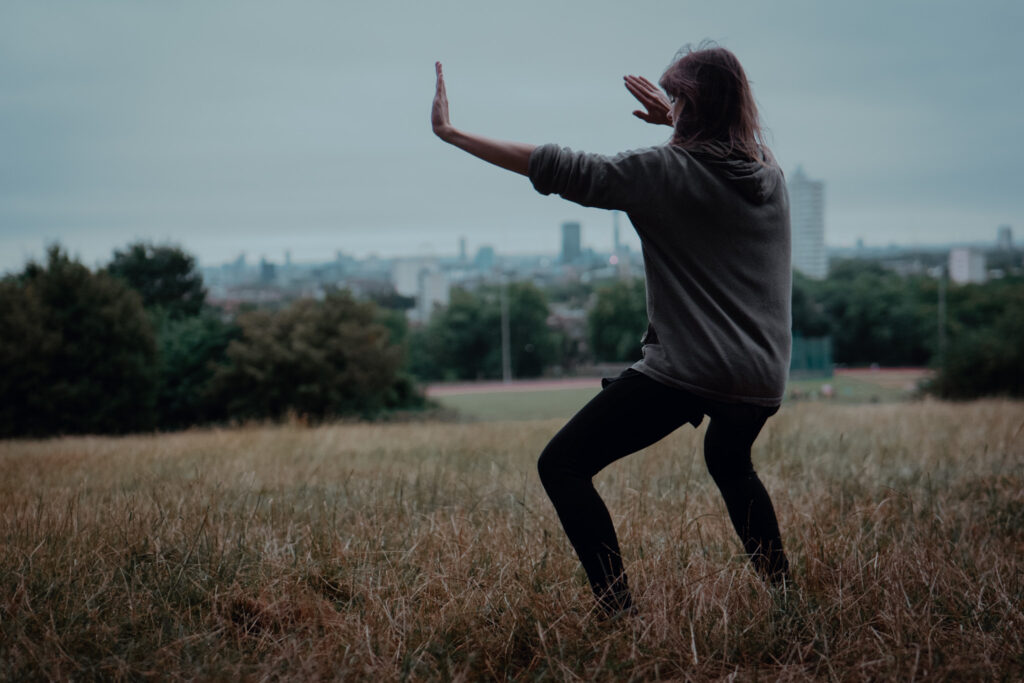


The Nine Palace Step (九宮步) is a highly specialized form of dynamic footwork (moving steps) utilized in the Tai Chi Chuan system of Sifu Cheng Tin Hung. It is categorized alongside other advanced moving-step methods such as the Seven Star Step and the “Da Lu” (Large Rollback) step.
The Benefits
Training this footwork pattern allows a fighter to transition from static, stationary postures into highly mobile combat.
- Seizing the Initiative: The primary benefit of moving-step methods like the Nine Palace Step is that they train a fighter to clearly observe an opponent’s changing situation in real-time, allowing them to seize the tactical initiative and control the enemy during an active, shifting fight.
- Agility and Pursuit: It enables a practitioner to smoothly execute dodging maneuvers, rapidly change angles, and relentlessly pursue an opponent while maintaining their own structural advantage.
How Best to Practice It
There are two primary methods for practicing the Nine Palace Step to bridge the gap between basic forms and actual fighting:
- Dynamic Heavy Bag Work and shadow boxing: After building basic hand speed with stationary punching, a practitioner must progress to using the Nine Palace Step to actively move around a swinging heavy bag. You use the footwork to continuously practice dodging, stepping, and aggressively chasing the swinging bag, delivering strikes on the move. This safely habituates the vital combat reflex of pursuing a retreating target while striking.
- Moving-Step Push Hands (Partner Work): The Nine Palace Step is also practiced as a specific dynamic Push Hands routine with a live partner. Practicing it this way teaches fighters how to physically apply Tai Chi’s core principles of sticking, connecting, yielding, and following while navigating complex spatial movements. It forces both partners to deal with constantly changing distances and angles, making their defensive and offensive reactions much more realistic.
Practicing dynamic footwork like Nine Palace Stepping—which involves continuous dodging, shifting, and chasing—for an extended period yields several profound cardiovascular adaptations:
- Activating the “Second Heart”: Nine Palace Stepping requires the practitioner to maintain a continuous, lowered, semi-squatting stance while moving. The intense, prolonged isometric and dynamic work required by the major leg muscles during these stances acts as a powerful “second heart”. The continuous contraction and relaxation of the heavy thigh and calf muscles actively pumps blood and lymphatic fluid from the lower limbs back up to the upper body, drastically enhancing systemic circulation.
- Massive Oxygen Consumption and Energy Expenditure: Scientific studies on Tai Chi’s unique biomechanics show that performing continuous, low-intensity resistance movements in these bent-knee postures induces a much greater energy expenditure than high- or low-resistance exercises performed at normal walking or jogging speeds. Furthermore, extended practice triggers a prolonged “excess post-exercise oxygen consumption” (EPOC), meaning your cardiovascular system continues to work at an elevated metabolic rate to take in oxygen for up to three hours after the exercise is finished.
- Developing the Aerobic “Long-Term Energy System”: While explosive striking utilizes the short-term anaerobic energy systems, sustaining complex motor activities (like intricate footwork patterns) over a prolonged period forces the body to switch to the oxidative “long-term energy system”. This specifically trains the cardiovascular and respiratory systems to efficiently convert stored glycogen and body fat into energy, building deep muscular and cardiovascular endurance.
- Vasodilation and Lowered Blood Pressure: To properly execute extended Tai Chi footwork, the practitioner must maintain deep, diaphragmatic nasal breathing. This draws in nitric oxide produced in the nasal sinuses, which acts as a powerful vasodilator. As the heart pumps harder to supply the working legs, the nitric oxide actively widens the diameter of the arterial blood vessels and bronchioles, allowing the increased blood volume to flow faster while actively lowering blood pressure and increasing oxygen uptake by up to 20%.
’