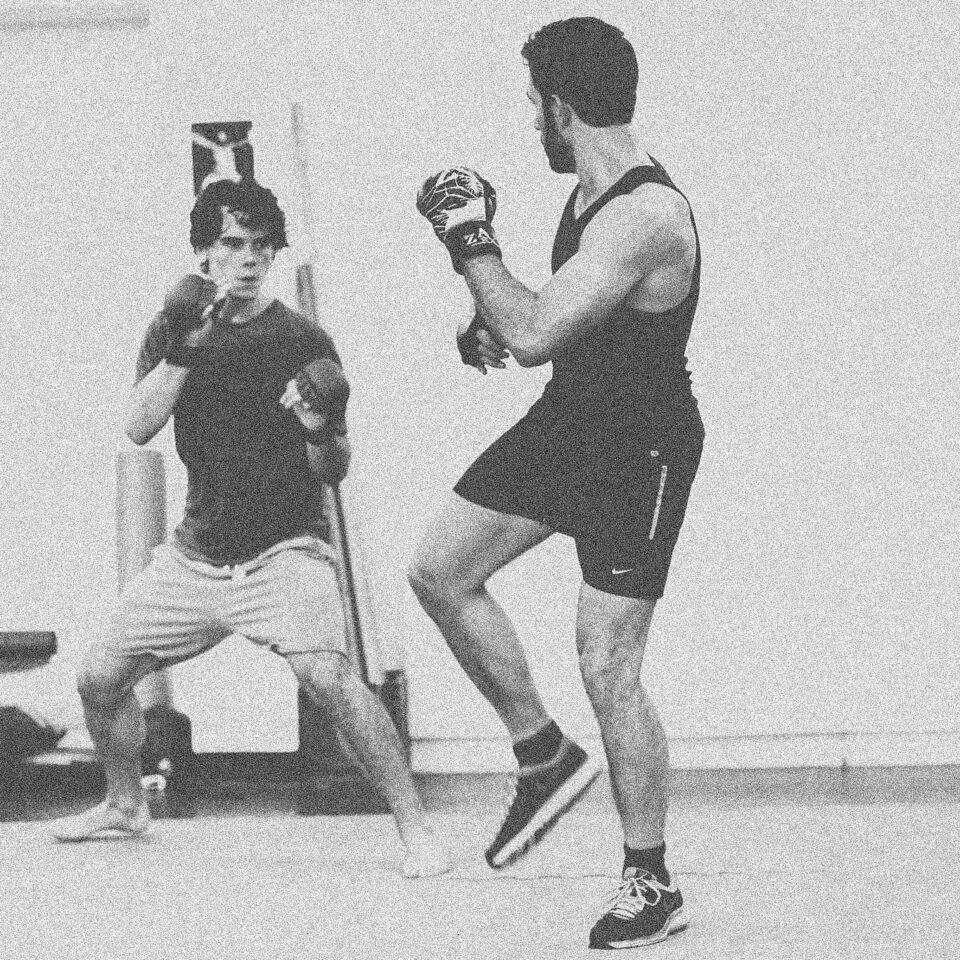



The martial arts applications of Tai Chi are deeply rooted in the physical and mental principles of relaxation, alignment, and intention. Rather than relying on brute strength, Tai Chi utilizes highly refined sensitivity and mechanics to overcome an opponent. The martial applications center around these key concepts:
Core Self-Defense Principles
- Using Stillness to Overcome Motion (以靜制動): In self-defense, a Tai Chi practitioner maintains a calm, clear mind to accurately observe the opponent’s intentions. The classic strategy dictates: “If the opponent doesn’t move, I don’t move; if the opponent moves slightly, I move first” (彼不動,己不動;彼微動,己先動). This means waiting for the opponent to commit to an attack, allowing their momentum to expose their weaknesses, and intercepting them before their strike lands.
- Using Softness to Overcome Hardness (以柔克剛): You should never meet force with opposing force, as the physically stronger person will always win. Instead, Tai Chi uses circular, yielding movements to neutralize a heavy, aggressive attack, causing the opponent’s strike to land on nothing and exhausting their energy.
Managing and Redirecting Force
- Understanding Force (懂勁 – Dong Jing): This is the high-level ability to interpret and react seamlessly to an opponent’s energy. It involves three continuous steps: visually recognizing the attack, neutralizing/redirecting the incoming force (化勁), and finally emitting your own counter-force (發勁) the instant they lose their balance.
- Avoiding Double-Weighting (雙重): Just as in solo practice, evenly distributing your weight or using stiff, rigid resistance in combat makes you sluggish and vulnerable. Agility in shifting your weight allows you to evade attacks and prevents you from getting locked into a stalemate of brute strength.
- Deflecting a Thousand Pounds with Four Ounces (牽動四兩撥千斤): By applying small, highly leveraged forces to an opponent whose center of gravity has already been compromised by your yielding, a physically weaker person can effortlessly toss a much stronger attacker.
- Sticking and Following (黏、連、棉、隨、不丟頂): This principle requires maintaining constant, soft physical contact with the attacker. You adhere to their limbs like cotton—without resisting, but also without pulling away—allowing your nervous system to “listen” to the direction of their force and instinctively follow their movements.
The Eight Core Powers (八勁) The physical techniques used to execute these defensive strategies are categorized into eight foundational kinetic powers:
- Peng (掤 – Ward Off): An expansive, bouncing energy used to intercept an opponent and disrupt their balance.
- Lu (捋 – Rollback): Yielding and leading the opponent’s incoming force past you, making them lean forward and lose their center of gravity.
- Ji (擠 – Press): A forward, squeezing force used to rebound energy back into an opponent’s compromised structure.
- An (按 – Push): A downward and forward pressing action.
- Cai (採 – Pluck), Lie (挒 – Split), Zhou (肘 – Elbow), and Kao (靠 – Bump): Additional martial forces involving quick jerks to unbalance an opponent, tearing energy, and close-quarters strikes using the elbow or shoulder/back.
Training Progression for Combat To successfully apply these applications, practitioners must follow a specific training hierarchy. After mastering the solo forms (套路) to build body mechanics, students must practice Push Hands (推手). Push hands is the essential bridge to real combat; it is a two-person drill specifically designed to develop “listening energy” (聽勁)—the tactile reflex needed to sense an opponent’s weak point instantly without relying on sight. Only after developing this profound sensitivity can a practitioner effectively apply takedowns (跌撲) and engage in free sparring (散手).