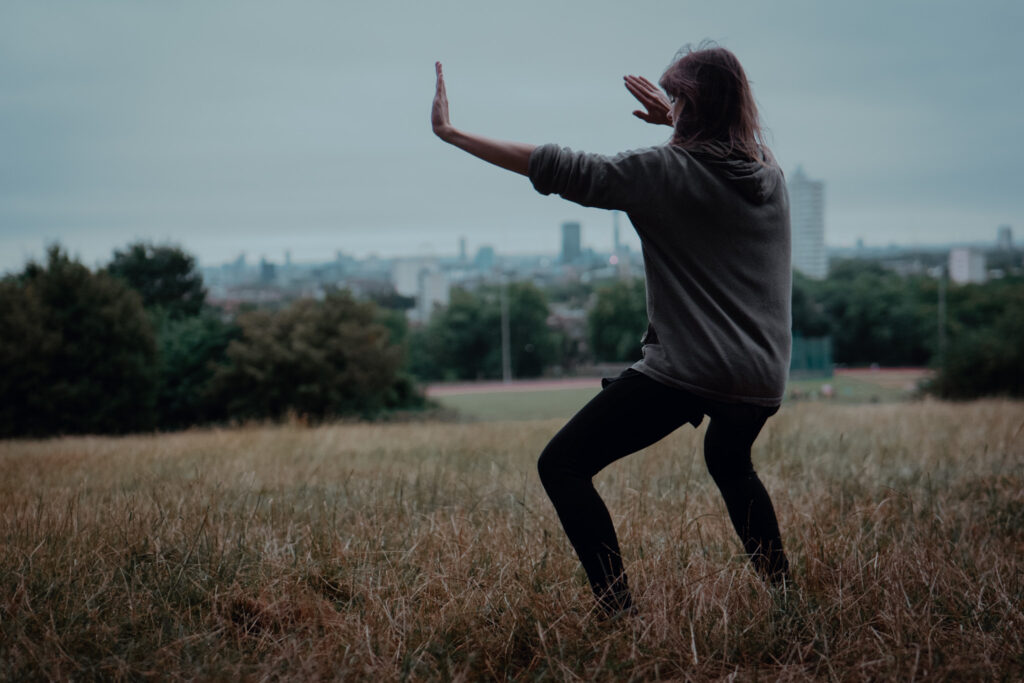



Practicing Tai Chi correctly involves integrating physical alignment, mental focus, and specific training methodologies. Here are the core principles for practicing Tai Chi:
Body Alignment and Posture
- Upright Head and Neck (頂頭中正): Keep your head centered and upright. Do not lean your head forward or backward. Your neck and spine should form a continuous straight line to keep the neck muscles relaxed.
- Sink Shoulders and Drop Elbows (沉肩墜肘): Never shrug your shoulders or let your elbows stick out rigidly. Your arm joints should never be fully locked or straightened; they should remain slightly bent and flexible.
- Contain the Chest and Pull up the Back (涵胸拔背): Keep your chest and back completely relaxed. Do not tense your chest or puff it out, as relaxing allows for natural breathing and nimble movements.
- Drop the Hips and Relax the Waist (垂臀鬆腰): The waist is the commander of your body’s movement. Keep your spine straight, tuck your hips slightly to avoid sticking out your buttocks, and keep your waist fully relaxed to allow energy to flow to your limbs.
- Distinguish Empty and Full (虛實分清): Your center of gravity should be clearly defined. When stepping or shifting, one leg should support the weight (solid/full) while the other remains light (empty). Avoid distributing your weight evenly on both legs at the same time (“double-weighting”), as this makes movements stiff and sluggish.
Mental Focus and Movement Execution
- Mind and Body Unification: Before starting, your mind must be peaceful and your body relaxed. Tai Chi is guided by intention (Yi), not brute force. Your mind should lead the movement, and your body should follow (“以意行”).
- Slow and Force-Free Practice (慢練與不用力): Movements should be slow, soft, and continuous. Practicing slowly without stiff force allows your intention and physical movements to coordinate perfectly (“動中求靜” or seeking stillness in motion). It also promotes blood circulation and helps the muscles and joints become extremely flexible and responsive.
- Natural Breathing (氣沉丹田): Breathing must be completely natural, deep, and slow. You should never force your breath or hold it, but rather allow the breath to sink to the lower abdomen (Dan Tian) in coordination with your movements.