
Original price was: £111.00.£69.00Current price is: £69.00.
Description
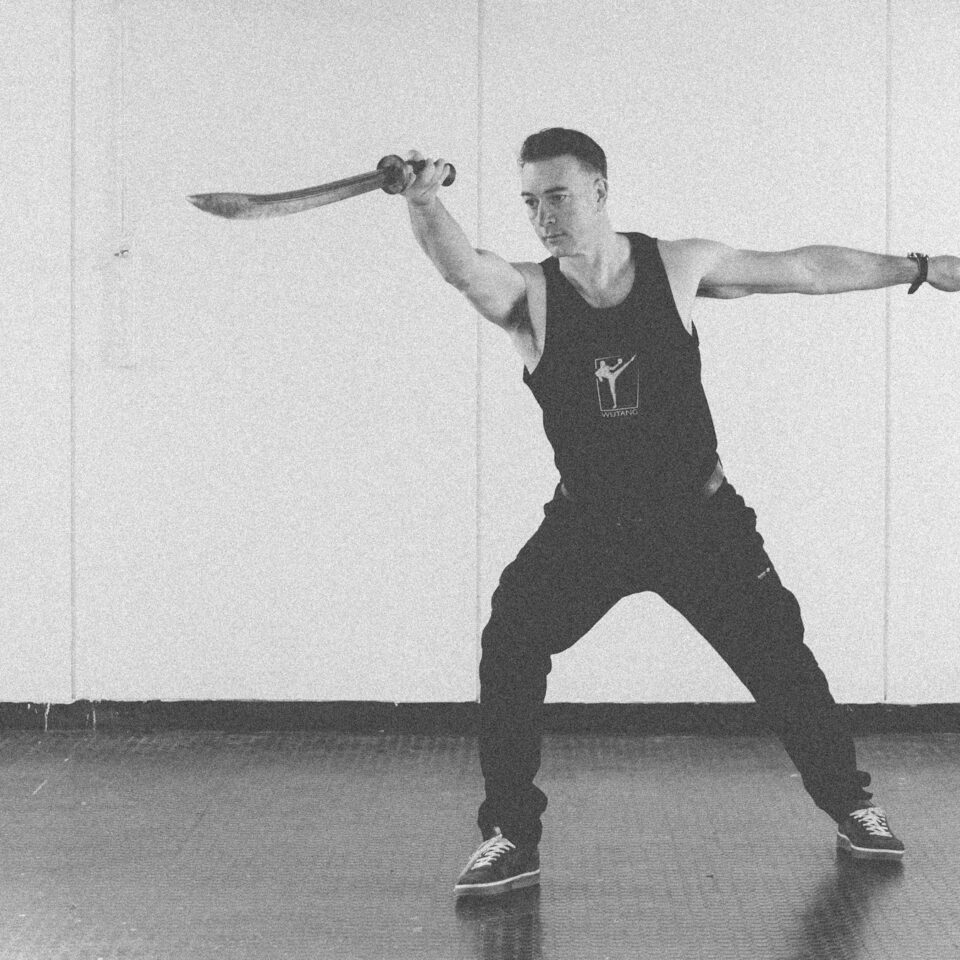
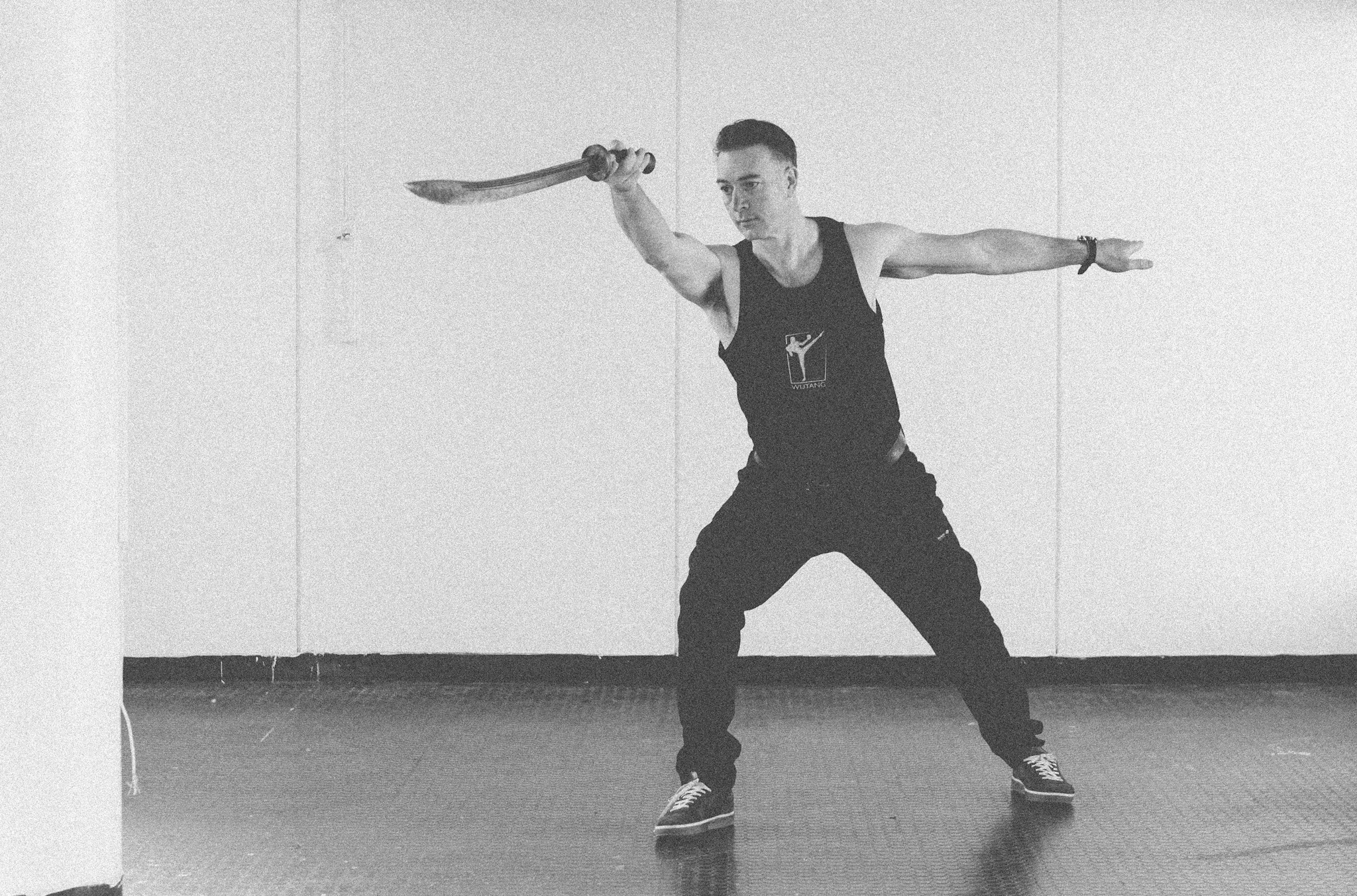
Xuan Xuan Dao: profound and mysterious Sabre
The Strategic Genesis of Internal Practice
The T’ai Chi Sabre is far more than a historical artifact or a mere prop for performance; it is a sophisticated biomechanical accelerator designed for advanced “energy cultivation” and “health preservation.” In the modern professional landscape, where the “hectic lifestyle” frequently results in physical stagnation and psychological burnout, this practice offers a strategic intervention.
By introducing a weighted blade into the movement equation, we provide a specific, targeted resistance to the body’s myofascial system.
Unlike empty-hand forms, the Sabre’s off-center mass and the resulting centrifugal force during motion create a unique load that “pre-tensions” the fascial bodysuit. This course synthesizes the ancient wisdom of lineage-holders with the analytical precision of sports science to transform your physical structure.
We are moving beyond the “clunky,” isolationist patterns of 1970s bodybuilding into the high-efficiency realm of biotensegrity, shifting the focus from mere muscle to a unified, resilient system. This transformation is anchored in several specific scientific pillars that define the internal arts.
The Psychological Edge of the “Power Posture”
The expansive, erect stances required for sabre training function as “Power Postures.” According to research by Carney, Cuddy, and Yap (2010), these alignments impact neuroendocrine levels in as little as two minutes, fundamentally shifting the practitioner’s psychological state.
|
Posture Type |
Biological & Psychological Effects |
|
Expansive/Erect (e.g., Sabre Stances) |
Increased testosterone; decreased cortisol; higher risk tolerance; projected authority; increased self-confidence. |
|
Constricted/Slouched (e.g., Collapsed Chest) |
Decreased testosterone; increased cortisol; feelings of fear, hostility, powerlessness, and sadness. |
The Science of Bio-Tensegrity and Structural Integrity
Traditional fitness often relies on “clunky” movement patterns that isolate muscles, effectively “de-training” the nervous system’s ability to coordinate complex actions. Internal martial arts, conversely, treat the human body as a biotensegrity model: a self-tensioned, continuous myofascial network where bones act as floating compression struts. The T’ai Chi Sabre acts as a dynamic resistance training tool that forces this network into a state of optimal alignment.
The mechanical stress of maneuvering the Sabre stimulates fibroblasts, the cells responsible for collagen production. Through “mechanotransduction,” the body responds to the Sabre’s weight by remodeling the connective tissue into a more youthful, elastic arrangement. The spirals and circles inherent in Sabre training are not aesthetic choices; they are geometric requirements that engage the longest possible myofascial chains.
Structural Adaptations: T’ai Chi vs. Conventional Training
|
Feature |
T’ai Chi / Internal Practice |
Conventional Training (Bodybuilding) |
|
Force-Velocity Curves |
Explores the full curve, bridging “Striking Strength” (speed) and “Grappling Strength” (force). |
Often limited to slow-speed, high-force isolated contractions. |
|
Inter-muscular Sequencing |
All muscles sequence together; utilizes the “Serape Effect” to amplify whole-body force. |
Moves one limb at a time; creates “clunky” or de-trained neural patterns. |
|
Connective Tissue Remodeling |
Stimulates collagen via mechanotransduction; yields long-lasting, resilient results. |
Focuses on muscle fiber hypertrophy; often neglects fascial elasticity and health. |
The Internal Power Mechanism
Force production in this system is a summation of four critical factors:
- The Pelvic Tilt: Straightening the lower back allows the lumbodorsal fascia to bear the load, transferring power from the legs to the upper body far more efficiently than spinal muscles alone.
- Abduction of Scapulae (“Bear Shoulders”): Widening the shoulder blades stiffens the fascial system, creating a rounded upper back that provides core stability and a “bridge” for force.
- The Serape Effect: The diagonal relationship between the pelvis and the ribcage creates a rotational windup. The Sabre’s mass amplifies this windup, allowing for a massive summation of force upon release.
- Neural Excitation: Proper intent (Yi) maximizes neural excitation. This effectively “switches off the brakes”—the antagonistic muscles—allowing for maximum force development without internal resistance.
By training the Sabre across the Force-Velocity Curve, we bridge the gap between “Striking Strength” (high speed, lower force) and “Grappling Strength” (lower speed, high force), allowing the practitioner to reach their true genetic potential.
Force Production
The contrast between internal sequencing in sabre training and “bodybuilding-style” training is sharp. Isolation exercises, which pump a single muscle in simple patterns, can induce a “de-training effect” on the nervous system, rendering movement “clunky.” Conversely, sabre training utilizes “intermuscular sequencing.”
By moving the weighted sabre fluidly and with minimal tension, the practitioner “switches off the brakes”—the antagonistic muscles—through relaxation and intent. This maximizes “neural excitation,” allowing the body to produce force as a single, coordinated unit.
Engaging in the flowing sequences of the Sabre is a strategic exercise in neuroplasticity. This “meditative movement” reduces cortisol and fosters “alpha wave” synchronicity, shifting the brain into a state of focused calm. For the high-pressure professional, this training enhances “Attention Control” and the processing of “Interoceptive Signals,” effectively anchoring the mind in the present. This isn’t just relaxation; it is a refinement of the nervous system.
The Psychological Dividend
- Emotion Regulation: Laban Movement Analysis confirms that the rhythmic, expansive, and free-flowing movements of the Sabre are associated with and actively enhance feelings of happiness and power. Lightness in movement signals the brain that the environment is secure.
- Spatial Awareness: Through “Learned Dispositional Mindfulness,” the practitioner develops superior spatial cues. This translates to an increased ability to process environmental threats, moving from being “easy prey” to a confident, aware presence.
Self-defense begins with self-confident body language. A “Plumb Erect” and “suspended” posture communicates authority, often de-escalating conflict before it begins. However, when engagement is necessary, the Sabre training provides a foundation for spontaneous, whole-body movement.
True martial mastery lies in the ability to “adapt within a situation” rather than memorizing rigid labels. If an opponent does something you have never seen, you must change according to the principle.
The Mastery of the T’ai Chi Sabre is a scientifically grounded system that integrates breathing, relaxation, and biofield energetics into a single, accessible method of self-empowerment. The results are not years away; they are immediate.
For practitioners without a sabre, traditional practical t’ai chi practitioners such as Cheng tin Hung would use heavy sticks as alternatives if they didn’t have a sabre handy. So even without owning a sabre we can still reap the benefits using something similar in shape and weight.
By applying mechanical stress through the weighted path of the sabre, practitioners stimulate the fluid flow through the bone canal system (streaming potentials) and the production of youthful, wavy collagen fibers.
Whether using a traditional Dao or an alternative, the goal remains a holistic union of mind, breath, and structural load. This practice allows the individual to reach their full genetic potential—forging a body that possesses the “tenacious energy” of the sinews and the refined movement patterns of a master.
Sabre training techniques can easily be applied in self defence using everyday objects such as umbrellas or anything within reach.
Footwork improves, the cardiovascular system is developed and a highly coordinated power generating body is produced.
- The video course includes detailed instruction of the entire sabre form from multiple angles.
- Applications of the movements are shown, so you can practice with a partner too.
In summary you can easily learn how to practice the individual movements as well as the entire form relatively easily. If you are interested in applications you will soon be able to apply the movements with a training partner.