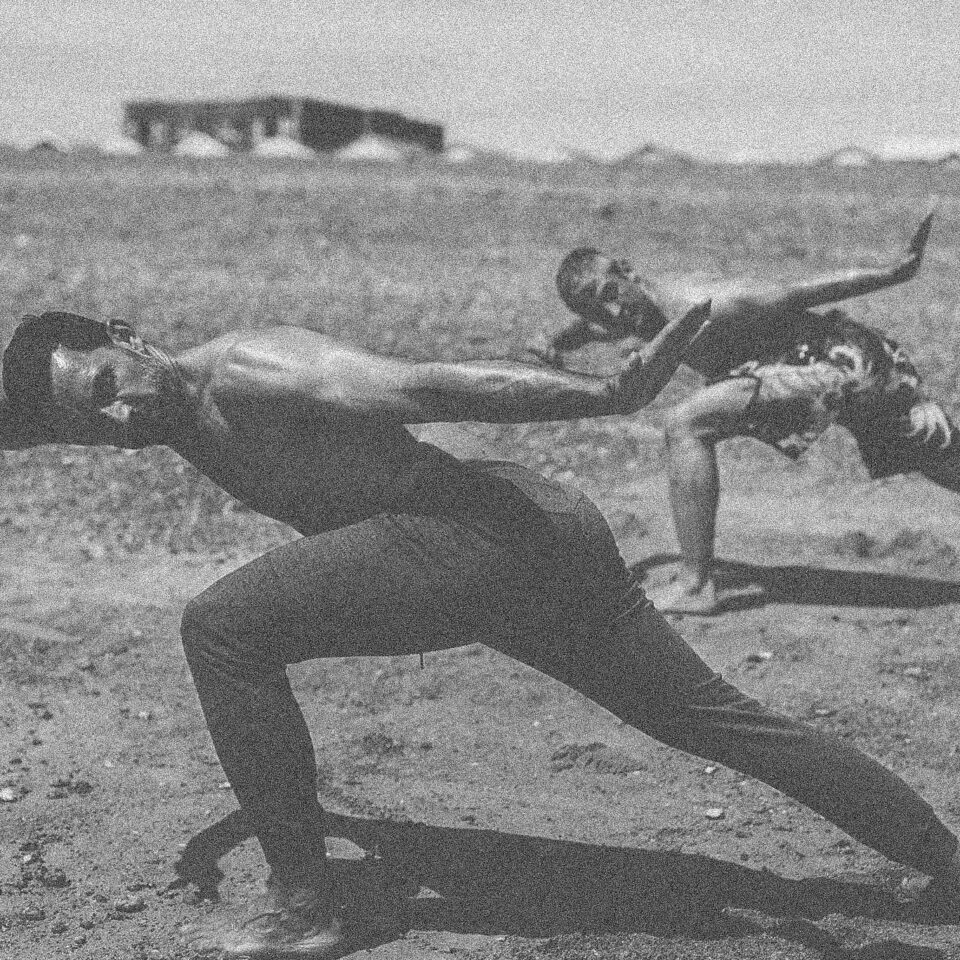



Here is how the thoracolumbar fascia mechanically bridges leg and arm power:
Because the isolated back muscles (such as the erector spinae) are far too weak to efficiently transfer the massive power generated by the legs on their own, the body relies on this continuous fascial network to safely channel that force.
- Direct Anatomical Linking: The thoracolumbar fascia acts as the physical bridge connecting the lower body to the upper body. Specifically, it forms a continuous chain that links the powerful gluteus maximus muscles of the lower limbs to the latissimus dorsi muscles that move the upper limbs.
- Creating a Pressurized “Hoop”: When the core muscles (the transverse abdominis and the internal and external obliques) contract, they pull laterally on the thoracolumbar fascia. This lateral pull creates a tightly tensioned “hoop” around the midsection. This tightened hoop, combined with intra-abdominal pressure from deep breathing, stabilizes the lumbar spine and provides a solid, unified anchor base so that explosive power can travel upward without “leaking”.
- Load Bearing through Pelvic Alignment: The fascial network is incredibly strong. For example, it allows a powerlifter to lift up to 250kg, whereas the spinal muscles alone can only support about 50kg. To shift the body’s load onto this fascial bridge, a practitioner must adopt a posterior pelvic tilt (tucking the pelvis to reduce the natural inward curve of the lower back). This spinal alignment shuts down the erector muscles and forces the tightened thoracolumbar fascia to bear the load and transfer the power directly from the legs to the upper extremities.
- Generating Rotational Power (The Serape Effect): The thoracolumbar fascia is also the central component for generating rotational forces, such as in an overhead throw, a punch, or a round kick. It biomechanically couples the legs and arms to facilitate the “serape effect”. During a rotational movement, the pelvis and ribcage twist in opposite directions, creating a rotational windup that heavily stretches the fascial system. This stretch results in a huge summation of forces released in a powerful snapback when the tissues return to their resting lengths.
Adopting the upper-body alignment of t’ai chi form and Neigong directly manipulates your body’s biotensegrity to optimize the transfer of power.
When you adopt “bear shoulders”—which anatomically means abducting (widening) the scapulae to create a roundedz upper back—while simultaneously maintaining a posterior pelvic tilt (tucking the tailbone), you actively stretch and stiffen the entire fascial system of the back.
Scientific studies show that this specific alignment drastically reduces the muscular demands on your core while enhancing core stability.
In combat, this stiffened fascial bridge works in two directions:
- Offensively: It provides the most efficient pathway for kinetic forces generated by the lower limbs to travel up the back and out through the hands for striking.
- Defensively: If your raised hands receive a frontal force from an opponent, the “bear shoulders” alignment allows that force to be safely absorbed and dissipated by the unified structure of your whole body, rather than collapsing your arms.
Here is how consistent Neigong and form training physically forge this fascial network:
The Role of Form Training Tai Chi forms are systematically designed to utilize and stretch the body’s fascial “bodysuit” in several ways:
- Smooth and Quiet Motion: Seeking to perform movements smoothly, softly, and with as little noise as possible automatically shifts the workload away from the muscles and heavily onto the fascial system.
- Spiraling the Myofascial Chains: The constant, multidirectional coiling and spiraling movements—from the fingers down to the feet—firmly “wrap up” and engage the longest possible myofascial chains in the body.
- Elastic Pre-Tensioning: Every step in a form requires a complete weight shift from one foot to the other, combined with waist rotation. This creates a preparatory countermovement (a slight “pre-tensioning” in the opposite direction) that heavily loads the fascial system like a spring, resulting in a powerful, effortless elastic release.
- Tendon Conditioning: Moving slowly through constant, lowered semi-squat positions functions as prolonged isotonic-eccentric and isometric exercise, which has been shown to physically increase the stiffness and elastic power of human tendons.
The Role of Neigong (Internal Strength) Training
While general fitness focuses on muscles, Neigong focuses on remodeling the “sinews” (tendons and fascia).
- Natural development Static Neigong exercises like “Plant the Fence,” the goal is not dynamic muscular tension. Instead, you use just enough effort to hold the specific shape of the posture. This takes the muscles to a point of “natural tension” where the outer form is supported from the inside, developing a highly specific type of structural strength.
- Fascial Remodeling: By holding these challenging postures and gradually increasing the depth of your stances over time, you apply a greater degree of strain to the connective tissues than they experience in normal daily life. This sustained strain physically stimulates fibroblast cells to produce more collagen and remodel your fascial network into a more wavy, youthful arrangement.
After consistent training, the fascial bodysuit fundamentally changes—becoming thicker, more elastic, highly sensitive, and capable of generating immense striking power while remaining impervious to injury.
Practicing with traditional heavy weapons like the broadsword (sabre), spear, long staff, and t’ai chi’s lead weights serves as a progressive resistance method specifically designed to strengthen the body’s connective tissues.
Here is how incorporating the broadsword, spear and sword increases fascial resistance:
- Applying Progressive Overload: For the fascial network to physically remodel, it must be subjected to a gradual increase in mechanical strain that is larger in magnitude than what is experienced in everyday activities. Performing forms with a heavy broadsword actively applies this required resistance to the fascial “bodysuit”.
- Preserving Structural Alignment: While maneuvering the heavy weapon, the practitioner is required to maintain all the precise internal posture alignments of Tai Chi, such as the tucked pelvis and erect spine. Because the body’s structure remains properly aligned, the added weight is borne by the tensioned fascial network rather than isolating the muscles.
- Deepening the Stances: To further amplify the resistance, practitioners gradually increase the depth of their stances while wielding the weapons. This heavily strains the lower-body fascial chains while the upper body manages the weight of the weapons.
- Engaging the Fascial Chains: Traditional broadsword methods include dynamic actions like chopping, piercing, lifting, and sweeping. Executing these specific movements with a heavy weapon forces the practitioner to use their waist to direct power from the feet all the way out into the blade, which intensely stretches and engages the longest myofascial chains in the body.
By consistently exposing the body to this increased strain, the connective tissues adapt, becoming thicker, highly elastic, and far more resistant to injury.